

Getting enough hours of sleep but still waking up unrested? Before changing everything in your bedroom, look at the full picture: your schedule, your room, and how your bed feels every night. Better sleep starts with understanding what is bothering you and choosing one practical change you can stick with.
This guide covers eight practical steps and explains when to start with your routine and when your mattress, pillow, or bedding may need attention. The goal is to make informed choices and understand what each item does before adding it to your bed.
In short: Make enough time for sleep, keep a regular schedule, create a calm bedroom, and choose a sleep surface and pillow that feel comfortable to you. Start with the biggest source of discomfort instead of changing everything at once.
What does sleep quality mean?
Sleep quality includes how well you sleep through the night and how refreshed you feel when you wake up, as well as the number of hours you get. The CDC says adults aged 18–60 generally need at least seven hours a day. Enough sleep is also linked to mood, attention, and memory, so it deserves a place in your daily schedule. Source: CDC.
No single product guarantees perfect sleep for everyone. Your mattress may feel comfortable while light keeps you awake, or your room may be quiet while your bedtime keeps shifting. Separating these factors helps you focus your time and budget on what you actually need.
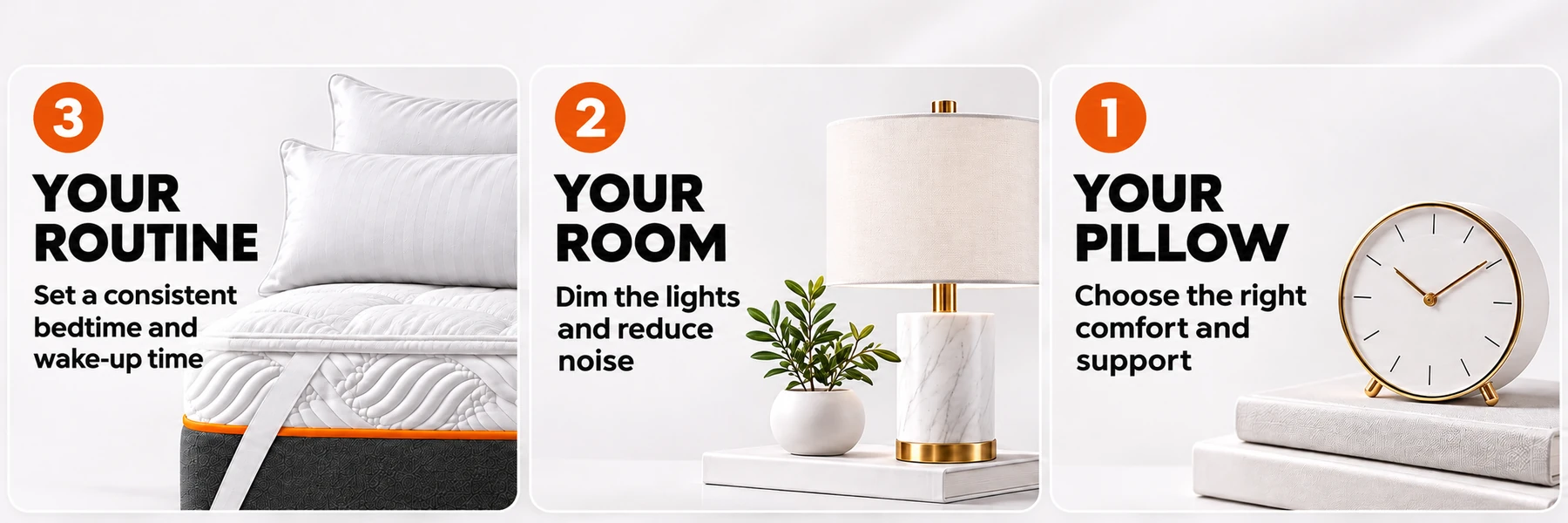 Start with your routine and room, then review your bedding.
1. Set a consistent bedtime and a calm routine
Choose bed and wake-up times you can keep on most days, and try to limit big differences between workdays and weekends. Use the hour before bed for quiet activities, such as light reading and preparing for tomorrow. Dim the lights and screens, and pay attention to late coffee or tea, as caffeine can remain in your system for hours. Source: NHLBI.
Keep your routine simple. One or two clear steps are easier to maintain than a long list. Put your phone away when you are done using it and prepare what you need for the morning before getting into bed.
2. Prepare the room before adjusting the bed
Check the light, noise, and temperature. Sleep guidance recommends a quiet, dark, comfortable room that is on the cool side. In Saudi Arabia, set the air conditioning to a level that feels comfortable to you rather than relying on one temperature for everyone. Try suitable curtains if outside light enters the room, and address noise where it starts. Source: NHLBI.
Look around while lying in your usual position. Is a device indicator light shining toward you? Can you reach the lamp easily? These small checks can reveal issues you may miss while arranging the room during the day, and many can be fixed without buying anything.
3. Choose a mattress around your needs
When comparing mattresses, do not rely only on labels such as “soft” or “firm.” Try the mattress in your usual sleeping position, check that it fits the bed base, and make sure there is enough room to move. If you share the bed, consider both people’s comfort and space, since preferences may differ.
Separate an uncomfortable feel from visible sagging or damage. The first may call for a different surface feel; the second calls for checking the mattress, base, and warranty terms. Do not use material name or mattress height as your only guide. Consider the specifications, your own trial, and the available instructions.
From Be Sleep: Explore the Silent Mattress, its sizes, and details, then compare it with your needs. For eligible sizes, read the terms of the 100-day trial in the store policy before ordering.
4. Give your pillow the same attention as your mattress
Your pillow is in contact with you every night, so try its height and feel with your mattress and usual sleeping position. Notice whether you need to stack pillows or keep folding one to feel comfortable. These observations can help you compare options, but they do not mean one height works for everyone.
Compare size, filling, cover feel, and care instructions. Pillow weight alone cannot determine whether it suits you. If you want to try a different material, compare it for yourself instead of assuming “hotel pillow” or “memory foam” is automatically the best choice.
For comparison: Start with the 1,300 g Hotel Pillow and the 1,500 g Hotel Pillow. You can also explore memory foam options in the Pillows section.
 Each item serves a different purpose. Choose what addresses your needs.
5. When might you need a mattress topper?
A topper, sometimes called a felt pad, sits on top of the mattress to change how the surface feels. It may be worth comparing if your mattress is in good condition but you would prefer a softer surface. Check the size, fit, and care instructions, and make sure your fitted sheet can accommodate the full height.
A topper cannot fix mattress sagging or a faulty bed base. If the surface is uneven, check the cause before covering it with another layer. A preference for a softer feel and the need to replace a damaged mattress are different decisions.
If you want to change the surface feel: Explore the Be Sleep Hotel Topper and check that it fits your mattress.
6. Choose bedding that feels good and is easy to care for
Bedding affects how your bed feels every day; it is more than a color that completes the room. If possible, feel the fabric, read its composition and washing instructions, and check the fitted-sheet size, depth, and set contents. A photo of a fully dressed bed does not necessarily mean every visible item is included.
For a calm hotel-inspired look, choose simple colors and a comfortable arrangement without adding too many layers. A spare set makes changes easier, and following care instructions helps maintain the fabric. Choose for your everyday use, not only for the photo.
To complete the feel: Explore the Be Sleep Hotel Bedding Set and compare its size and contents with your bed.
7. Know the difference between a protector and a topper
A waterproof protector is designed to help protect the mattress from spills, according to its specifications and instructions. A topper changes the feel of the surface. When choosing a protector, check the size, side depth, fit, and washing and drying instructions so you can care for its protective layer correctly.
A protector may be useful if you keep drinks near the bed or want an extra layer of protection. It does not replace changing your bedding or cleaning spills promptly, and a thin protector is not a substitute for a padded topper.
For this need: Review the Be Sleep Waterproof Protector and choose the size that fits your mattress.
8. Treat fragrance as an optional finishing touch
If you like a room fragrance, choose a scent you enjoy and use the product only as directed and on approved surfaces. Do not spray pillows or bedding just because they are nearby; suitability for fabrics depends on the product instructions, not its name or packaging.
Fragrance can be part of your personal style, but it is not a treatment for insomnia or a requirement for good sleep. Some people are sensitive to scents, so an unscented room is a good option if fragrance bothers you. Source: EPA.
If you enjoy this touch: Explore Be Sleep room fragrances, such as Revival and Allure, and follow each product’s instructions.
Where should you start tonight?
Choose one issue that keeps coming up, make one clear adjustment, and notice how it feels. You do not need to redesign your whole room to begin. If the issue is your routine, set a bedtime and make the hour before bed calmer. If it is your bed, identify the item that does not suit you and compare its size, feel, and care requirements.
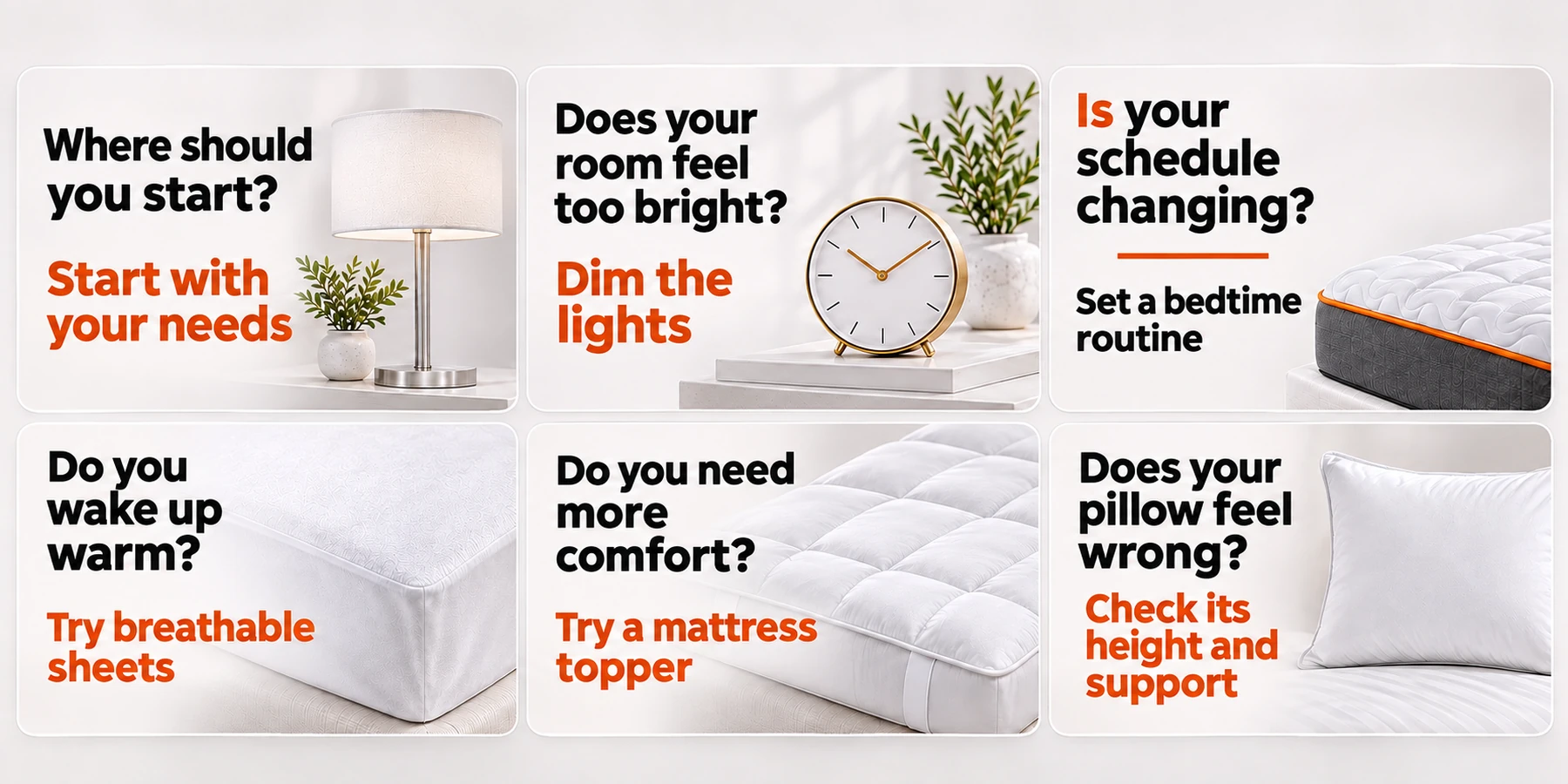 The best first step starts with one clear question: what do I need to change?
Frequently asked questions about sleep and bedding
Is changing my mattress enough to improve my sleep?
Not necessarily. Review your habits and room as well as the mattress. If sleep difficulties or tiredness continue despite enough time for sleep, speak with a healthcare professional rather than relying only on a new product. Source: CDC.
Is a heavier pillow better?
Weight is one detail to compare, not a final verdict. Consider height, filling, feel, size, and how comfortable it is in your usual sleeping position.
Do I need both a topper and a waterproof protector?
Not necessarily. They serve different purposes: a topper changes the surface feel, while a protector helps guard against spills. If you use both, check their sizes and fitting instructions.
Can room fragrance treat insomnia?
We present fragrance as an optional room choice and do not claim it treats sleep problems. Use it only if you enjoy the scent and the product instructions suit your needs.
Choose what works for your routine: Browse Be Sleep products after identifying your needs, and start with the item that has a clear purpose for your bed.
Sources
Health sources support general information and do not endorse store products. Links and information reviewed on October 12, 2026.