

How do you choose the right mattress when there are so many types and specifications? Start with your needs: your body weight, sleeping position, preferred feel, and whether you share the bed. Then compare the construction, trial terms, and warranty so you can make a clear decision.
This Be Sleep guide covers eight criteria for choosing a mattress and simple ways to compare your options before buying.
Before you start: Measure the inside of your bed base, set a budget, and think about your usual sleeping position. If you share the bed, discuss both people’s preferences; the right mattress should account for each of you.
1. Body weight and preferred comfort
Consider body weight alongside sleeping position and the firmness you find comfortable. Ask for the recommended weight per user and distinguish it from the mattress’s total load capacity; they do not mean the same thing.
Where to start comparing at Be Sleep?
- Up to 100 kg: Explore the Silent Mattress and compare its feel with your preferences.
- 100–150 kg: Review the Caress Mattress and check that its specifications suit your needs.
- If a premium feel is your priority: Add the Soul Mattress to your comparison and check the recommended weight and comfort level.
These are starting points for comparison, not technical weight limits or a guarantee of comfort. Confirm that the model and size suit your weight with the Be Sleep team.
2. Body support in your sleeping position
Do not judge a mattress only by sitting on its edge. Lie down in your usual position and notice how your shoulders, hips, and lower back feel. Do you sink more than you like? Does the surface feel too firm? Note what you notice when trying different options.
The goal is a balanced feel of comfort and support, not automatically choosing the firmest mattress. Do not rely on the word “medical” alone; ask about the specifications and try it yourself. If you have ongoing pain, choosing a mattress does not replace an assessment by a professional.
3. Partner motion transfer
If you share the bed, notice how much you feel the other person move. Try the mattress together if possible: one person lies down while the other turns or gets up, then switch and notice how much movement reaches each side.
Ask about the mattress design and how it handles motion transfer. Do not assume “motion isolation” means all movement disappears; trying the mattress helps you decide what works for both of you.
4. Responsiveness and ease of movement
This is different from isolating your partner’s movement. It is about how easily you can move on the mattress. Try turning from your back to your side, sitting up, and getting out of bed. Notice whether you can move easily or feel that you sink more than you like.
You may prefer a surface that contours around you or one that responds more quickly when you change position. Choose what feels comfortable in use instead of relying on a softness label alone.
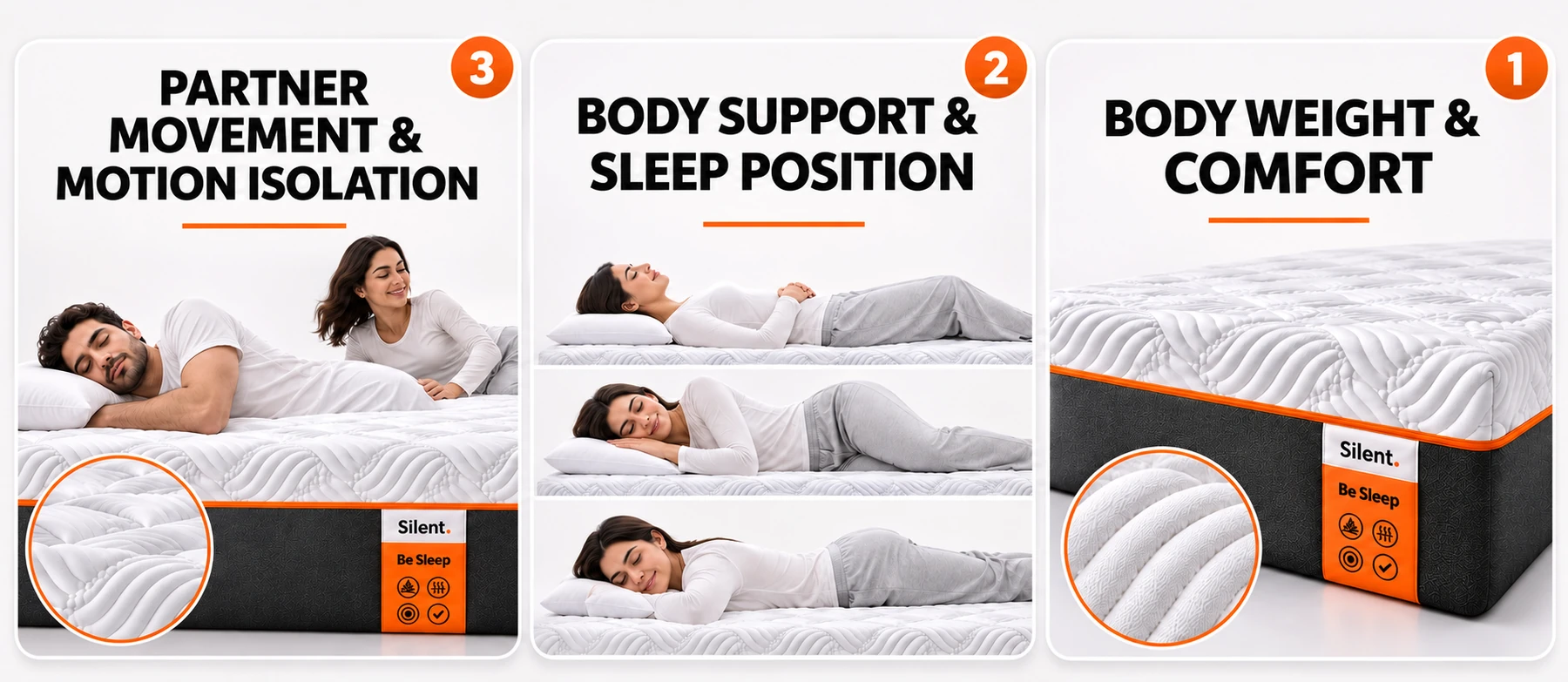 Try the mattress feel, support, and movement before comparing terms.
5. Trial period and terms
Trying a mattress in a showroom gives you a first impression. Using it at home lets you assess it in your normal routine. Check how long the trial lasts, when it begins, which products and sizes are included, how to care for the mattress, how to request a return, and whether any fees apply.
Be Sleep 100-day trial: Available for eligible mattresses and sizes under the store terms. Confirm that your selection qualifies before buying and keep a copy of your order and the terms.
During the trial, note the surface feel, ease of movement, and partner motion. These details can help you decide whether the mattress suits you.
6. Warranty coverage
Do not look only at the number of years. Read what is covered, the difference between replacement and repair, exclusions, bed-base and care requirements, and any service fees.
Coverage varies by mattress type and size. Review the Be Sleep Warranty Policy to see what applies to your choice. A manufacturing-defect warranty and a comfort trial serve different purposes.
7. Mattress construction and the role of each layer
Ask about the specific model: What support system does it use? What materials make up its comfort layers and cover? How are those components intended to affect the feel? Mattress height or the number of layers alone does not tell you whether it is right for you.
Ask for a clear explanation of each component and compare the details on the Silent, Caress, and Soul pages. Also check compatibility with your bed base and the care instructions.
 Review the trial and warranty terms and understand what each mattress layer does.
8. Customer reviews and after-sales service
Read reviews in detail instead of relying only on the average star rating. Look for comments that name the model, describe how long it was used, and explain the comfort feel. Separate these from reviews about delivery or branch service.
Read Be Sleep reviews on Google Maps to learn about customers’ experiences with the brand and service. Use them as one part of your comparison, remembering that comfort preferences differ.
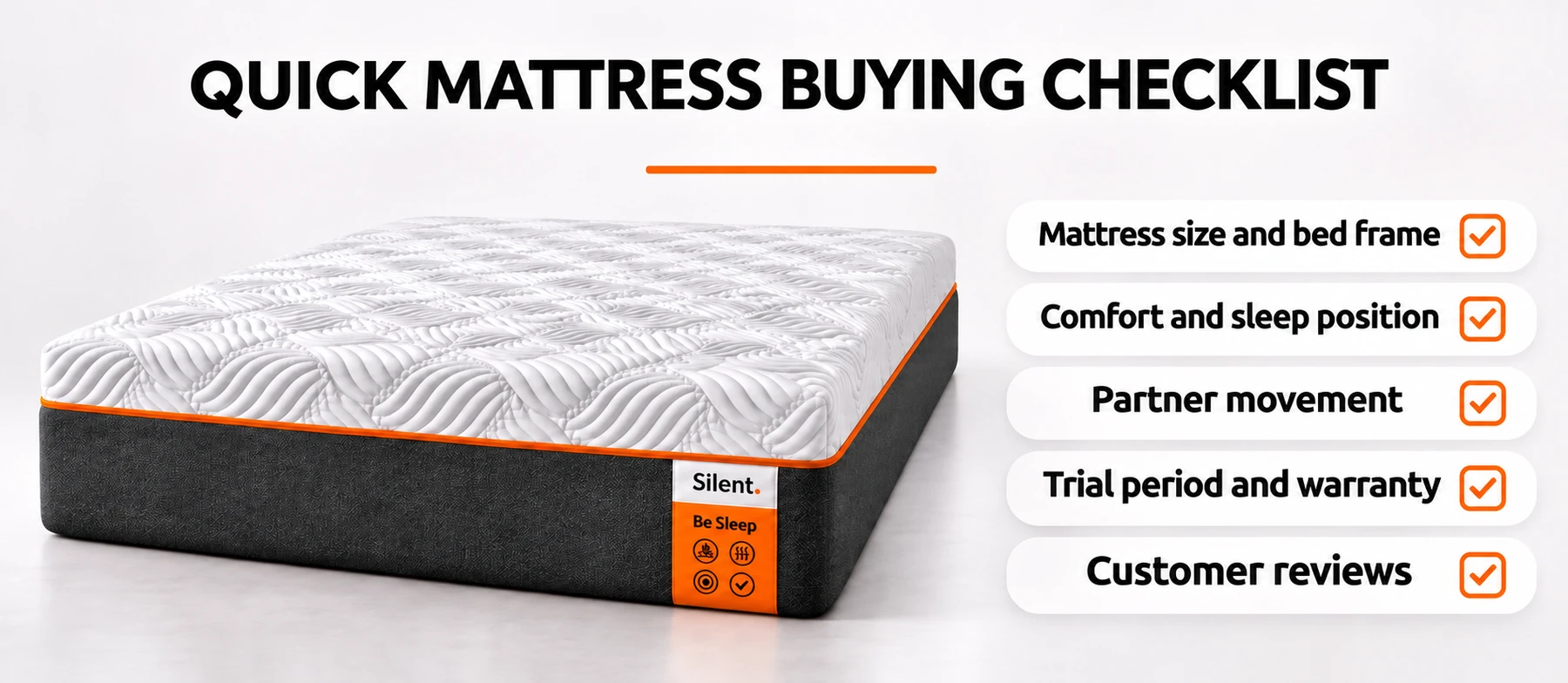 Keep these points handy when comparing mattresses.
Quick mattress buying checklist
- Check the size and compatibility with your bed base.
- Compare the recommended weight with comfort and sleeping position.
- Try ease of movement and partner motion transfer.
- Understand the construction, 100-day trial terms, and warranty.
- Review model feedback, price, and delivery details.
Start by comparing Silent, Caress, and Soul. Share your weight, sleeping position, and preferred size with the Be Sleep team to identify which options are worth trying.